
Can Bugs From A Real Christmas Tree Infest Your Home?
What To Do If You Find Tiny Bugs On Your Christmas Tree
You reach under the lowest branch to water the Christmas tree and notice that a few of the dark specks on the tree skirt are walking. Before you start taking ornaments off, have a closer look. If the visitors are conifer aphids or newly hatched spiders, the tree can usually stay right where it is. Neither is likely to establish an infestation in your living room.
Where you saw the first one matters. A cluster under a fir branch, a few strands of silk between ornaments, or a tan lump attached to a twig can each tell you something different. Take a close photo while you can still see the bug. A second shot that shows where it was sitting can be just as useful as the close-up.
Why Bugs Show Up After You Decorate
A fir at a tree lot can look perfectly clean on a cold afternoon. Outdoors, some insects spend the winter as eggs tucked along needles or stems. Others are already on the tree but barely moving. Once the tree spends time in a heated room, an adult can start walking again or a batch of eggs can hatch. The delay explains how you could hang every ornament yourself and still miss what turns up later.
One detail worth noticing is whether the bugs are all about the same size. Dozens of tiny creatures appearing together can come from a single egg case. That looks alarming on a pale wall, but it takes just one occupied twig for the whole group to arrive. A few insects at the nearest window may belong to the same group, since daylight draws some of them away from the branches.
A Closer Look At What’s On The Tree
Dark, long-legged insects clustered along a woody branch may be giant conifer aphids. Despite the name, even a large one is only about an eighth of an inch long. Their plump bodies lead people to mistake them for ticks. If you can enlarge a clear photo, look for the aphid’s two antennae. Ticks have none. Color alone won’t settle the question.
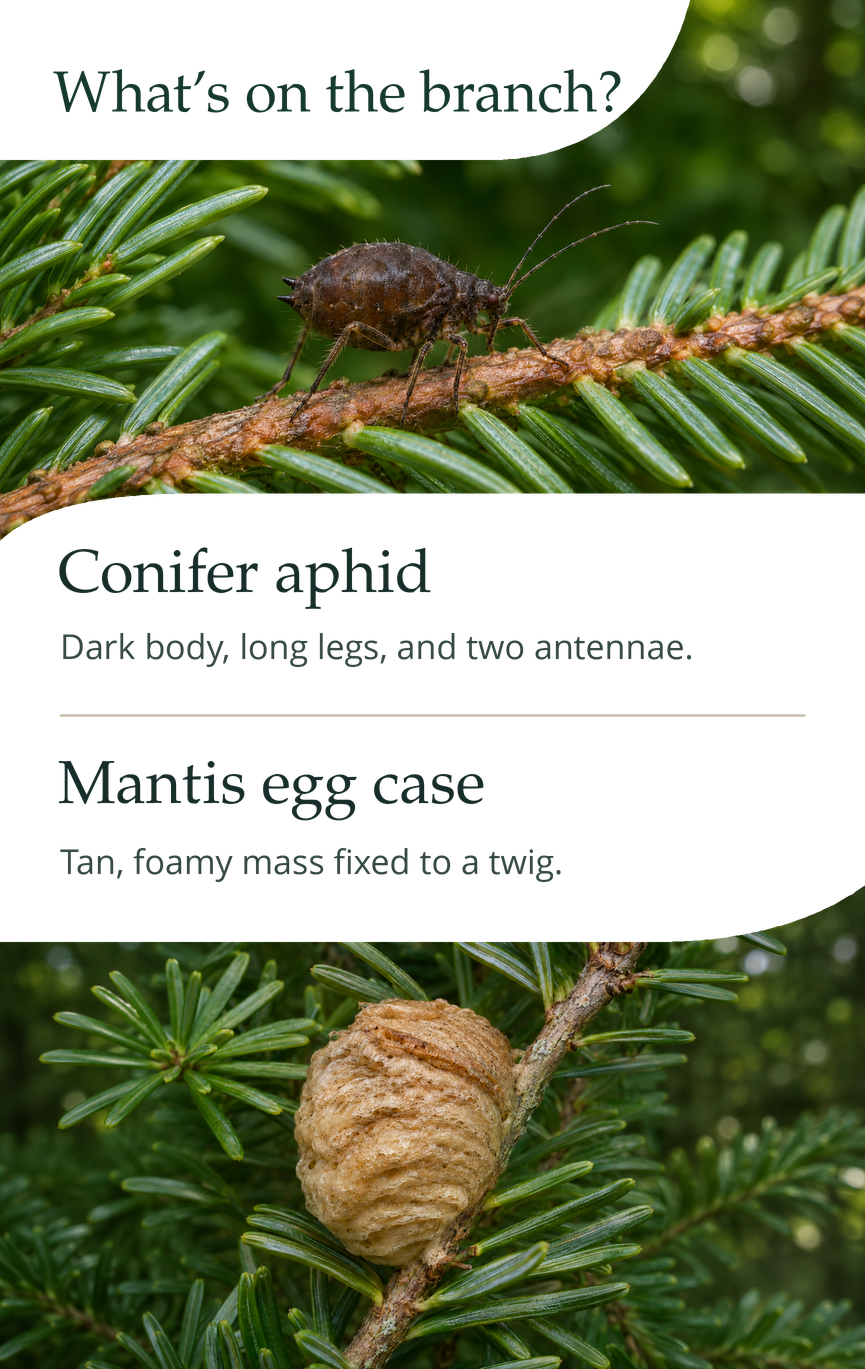

A praying mantis leaves a different clue. Its brown egg case is fixed to a twig and looks a little like a dab of dried foam. Weeks after the tree comes indoors, dozens of young mantises can emerge from that one spot. Look closely at one and you can see the bent front legs of a miniature praying mantis. They hunt other insects, so the needles they hatched beside won’t feed them.
On some pines, what catches your eye is a little patch of white fluff. Tiny sap-feeders called adelgids produce waxy threads that look like cotton against the dark bark. Unlike the aphids you might see crossing a tree skirt, adelgids generally stay put. A patch on a twig can sit there through Christmas without turning into bugs all over the room. Fine silk offers another clue. If tiny spiders are hanging between ornaments or gathering near the top branches, an egg sac may have hatched indoors. Some spiderlings wander far enough to leave a little web between the tree and a curtain. A web that bridges that gap doesn’t mean the curtain itself is infested.
What The Bugs Mean For Furniture And Houseplants
You can leave the pothos beside the tree. Most aphids that feed on conifers need a particular kind of evergreen. As a cut tree dries, an aphid may walk across the floor looking for another host, but the broad leaves of an ordinary houseplant won’t feed it. If you’ve also noticed insects clustered on the new growth of a houseplant, get a photo of those separately. They may be a different species altogether.
Wood furniture raises a different concern, especially if you see fine sawdust directly under the trunk. Occasionally a small bark beetle emerges from a cut tree and leaves a pinhole with dust beneath it. The beetles that come out of Christmas trees need much moister wood than they’ll find in a finished coffee table or hardwood floor. Where the dust is falling is more telling than how close the table happens to be.
There’s a good reason to keep aphids off the upholstery. Crushing one into a light-colored cushion or rug can leave a reddish or purple stain. Use the vacuum hose to lift it away before anyone sits down or rubs at the spot with a cloth.
When The Decorated Tree Can Stay
For a few bugs beneath the branches, vacuum the ones that wander onto the floor or windowsill and leave the ornaments up. Skip the insect spray. Aerosol sprays can be flammable, and spraying a decorated tree is unnecessary for the insects that typically come in on it. If large numbers keep dropping from several branches and you’d prefer to take the tree out, call the seller to ask about an exchange before you start unwrapping the lights.
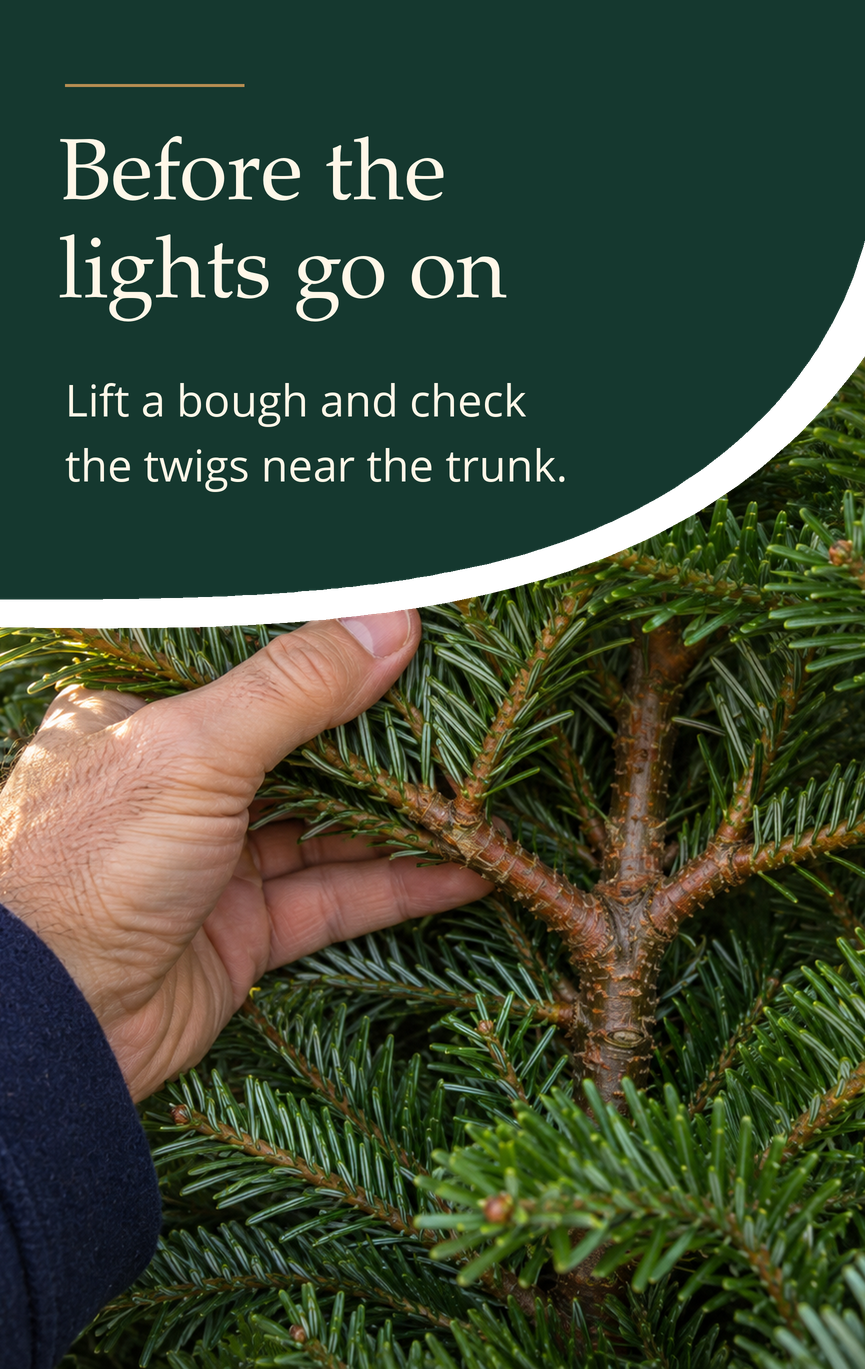

If you’re still choosing a tree, the easiest time to inspect it is before the seller wraps it in netting. Lift a couple of boughs and look along the woody stems toward the trunk, where a tan egg case or cluster of dark aphids is easier to see against the bark. A tree shaker can knock loose some insects, but an egg case is fastened to its twig. If you spot one, point it out to the seller while you still have other trees to choose from.
When you do take the tree down, there’s no need to throw away ornaments that hung on a branch with aphids. Check a ribbon or ornament for anything still crawling before you pack it, and brush away any stray web. Conifer aphids can’t feed on a glass bauble or survive until next Christmas in a box of lights.
Once the tree is gone, a different pattern deserves a fresh look. If insects keep turning up in a kitchen cabinet or around a houseplant across the room, note where you see them and whether they resemble the ones you photographed on the tree. If the sightings continue,
contact us today for help identifying the pest and checking your home for its source.