
Can A Bag Of Birdseed Bring Pantry Moths Into Your Kitchen?
Why Do Pantry Moths Keep Coming Back After You Clean Out The Cupboards?
The oats are in a glass jar now. The cupboard shelves are clean. Then, while you’re making coffee, you spot another little brown moth resting above a cabinet hinge. Before you empty the kitchen a second time, think about the last bag you opened to fill the bird feeder. When did you last look closely at what was in the scoop?
A bag of birdseed can bring pantry moths indoors. The Indianmeal moth, a common culprit, feeds on stored seeds and grains during its caterpillar stage. A mix of millet, sunflower seeds and cracked corn gives those caterpillars plenty to eat. The bag could be in the mudroom and the first moth you notice could still be in the kitchen.
What To Look For In The Birdseed
Tip the scoop a little and watch how the seed falls. Loose kernels usually roll apart. If several hang together, look closely at what’s holding them. Indianmeal moth caterpillars leave fine silk as they feed. It can catch bits of husk and grain dust, so a patch on the surface may look more like a dirty scrap of lint than a web. Look along the inside fold of the bag, too, where a few seeds can stay stuck even after the level drops.
A clump on its own tells you less than a clump with visible strands running between the seeds. A small, cream-colored caterpillar among those strands is another clue. If you spot an adult nearby, look at the wings while it’s resting. An Indianmeal moth typically has pale wings near the head and coppery brown coloring toward the tips. A clear phone photo of those folded wings is useful if you’re unsure what you’ve found.
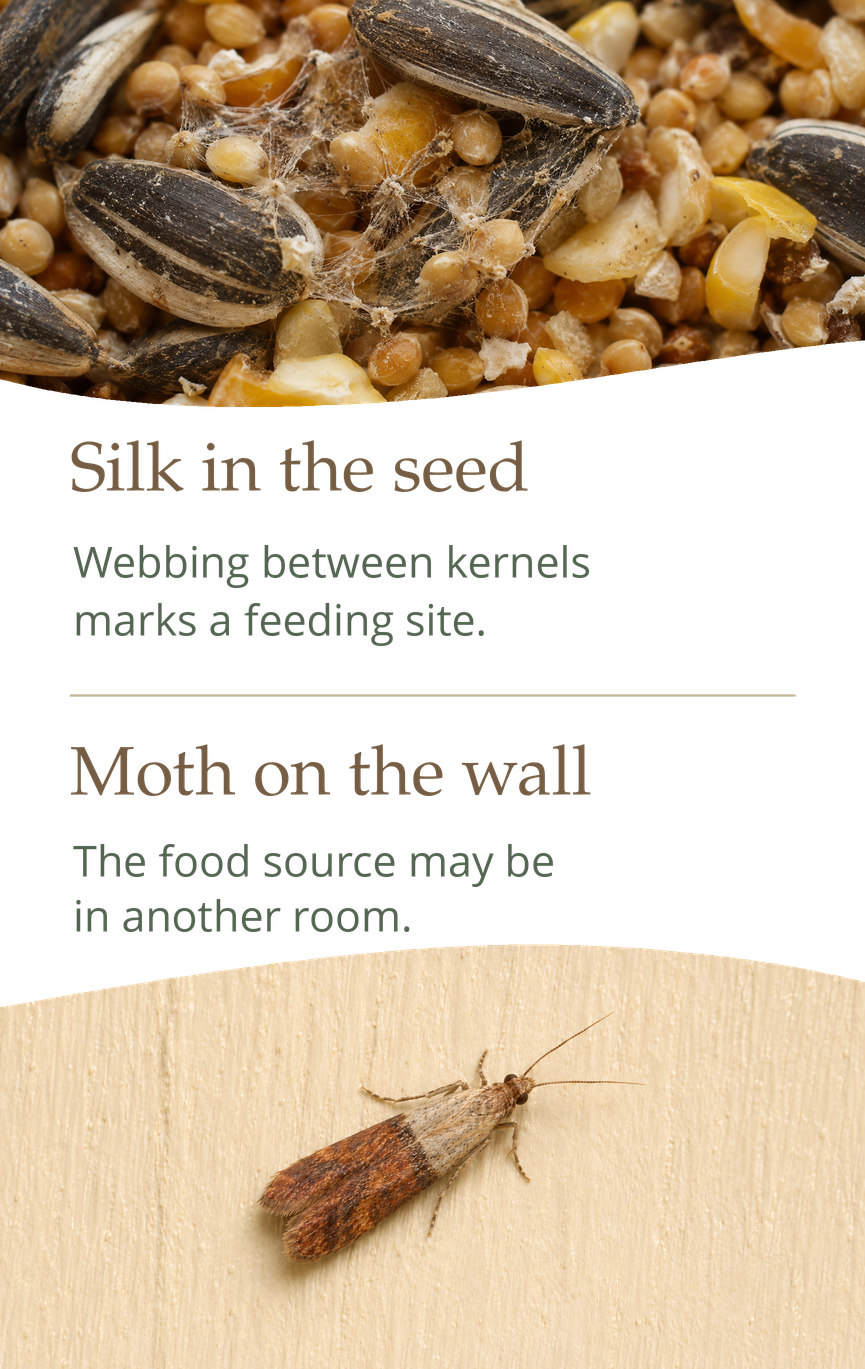

Even unopened seed can arrive with eggs or small larvae already inside. An open bag can also become infested after you bring it home. Webbing helps you identify a product where insects have been feeding. By itself, it can’t tell you whether the trouble began at the store or with something else in your house.
Why The Moth Is On The Ceiling
A caterpillar that’s finished feeding often crawls away from the seed to spin a cocoon. The sheltered spot it chooses might be where a wall meets the ceiling or in a crevice above a cupboard. By the time the adult emerges, the seed bag may be empty and out with the trash. That’s one reason a clean kitchen can still have a moth on the wall.
The distinction matters when you decide where to look next. The ceiling corner tells you where a caterpillar could have sheltered. Webbing inside a package tells you where one ate. If you find a moth in the hallway between the pantry and the back door, think about the food stored at both ends of that walk before deciding the kitchen needs another cleanout.
Which Packages Are Worth A Closer Look?
Start with dry goods stored beside the birdseed. That might mean dog biscuits on a mudroom shelf before it means flour across the house. In the kitchen, consider the things you use a little at a time. A bag of walnuts tucked behind the baking powder or the raisins saved for one recipe may have sat undisturbed through several rounds of grocery shopping.
Retail packaging offers different levels of protection. A cardboard flap can look neatly closed while a small opening remains in the seam of the inner bag. Larvae can also get through thin packaging. Pull the liner up far enough to see its folds and the food against the sides. A factory-sealed glass jar with an intact lid is a much lower priority than a paper sack on the same shelf.
Discard food or seed that contains larvae or webbing. If you find silk inside one package, check the susceptible foods around it individually. There’s no need to throw away every grocery item that shared the cupboard. And if the pantry turns up nothing, remember the dried corn in a fall decoration or a grain-filled craft put away with the holiday supplies. Neither looks like food on a household shopping list, but both are worth checking.
What To Expect After The Seed Is Gone
Write down the day you removed the infested seed. Adult Indianmeal moths can still appear for up to about three weeks as insects that developed earlier finish emerging. One moth the following morning is too little evidence to blame the groceries you just bought. Sightings that continue beyond that window, or fresh webbing inside a different package, give you a reason to look for another food source.
If you already have a pantry moth trap, its catch can help you track when adults are active. It can’t tell you which package to discard. A moth in the trap beside the cereal may have come from the mudroom, and an empty trap doesn’t outweigh the silk you can see inside a seed bag.
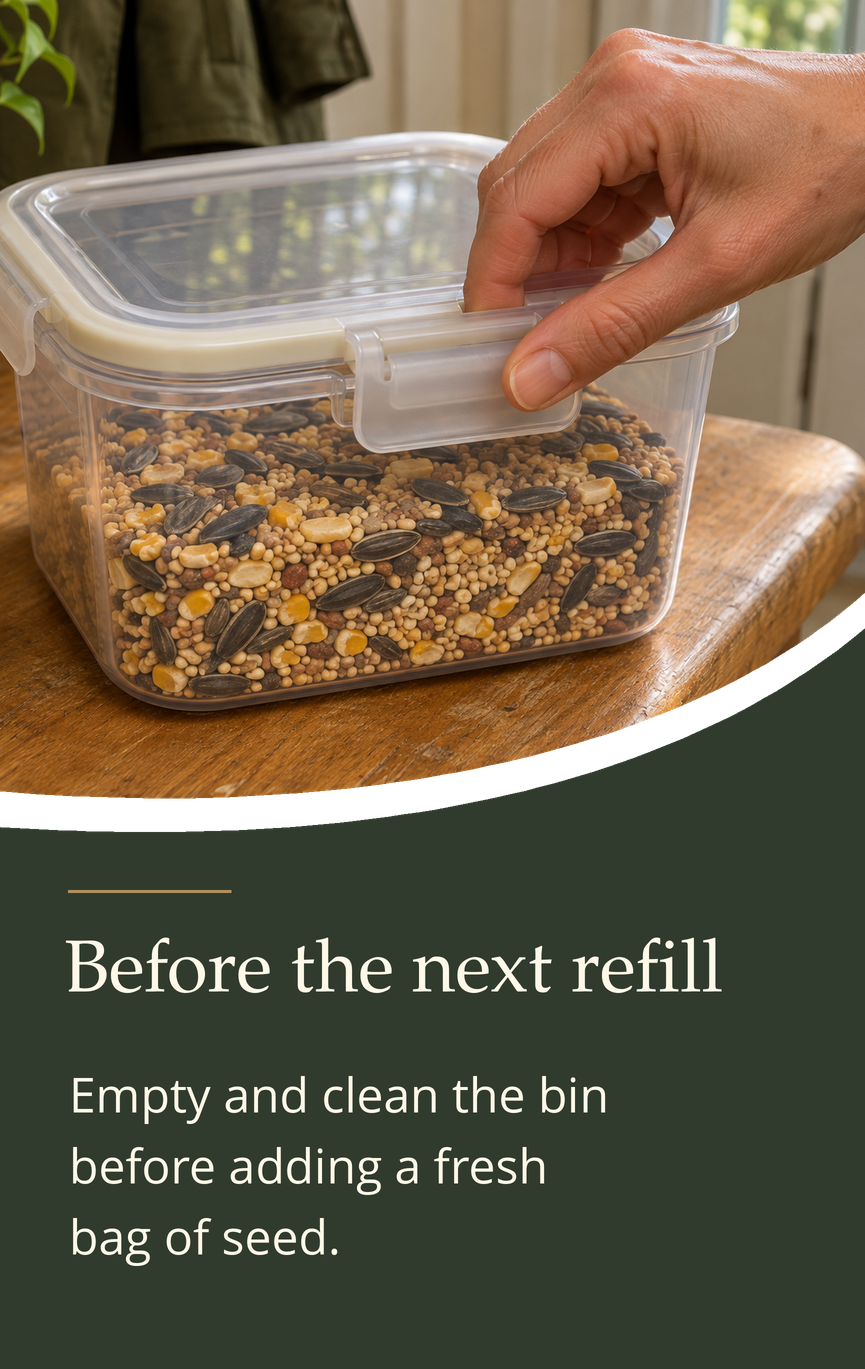

The next refill is a chance to make the seed easier to keep track of. Empty the bin, wash it and let it dry before adding a fresh bag. Topping off the last few scoops mixes two purchases and buries the oldest kernels at the bottom. A clear, sturdy bin with a tight-fitting lid also lets you see the seed along the sides before you open it. If you only fill one feeder every few weeks, a smaller bag may suit you better than a bulk sack.
When the moths keep appearing and you still can’t locate the food they’re coming from, an inspection can narrow the search. A photo of the moth and the date you discarded the seed give a pest professional a useful starting point. If you’d like help identifying what’s in your kitchen and figuring out where to look next,
contact us today to arrange a pest inspection.